Copyright 2026 © DSI Tyres. All rights reserved.
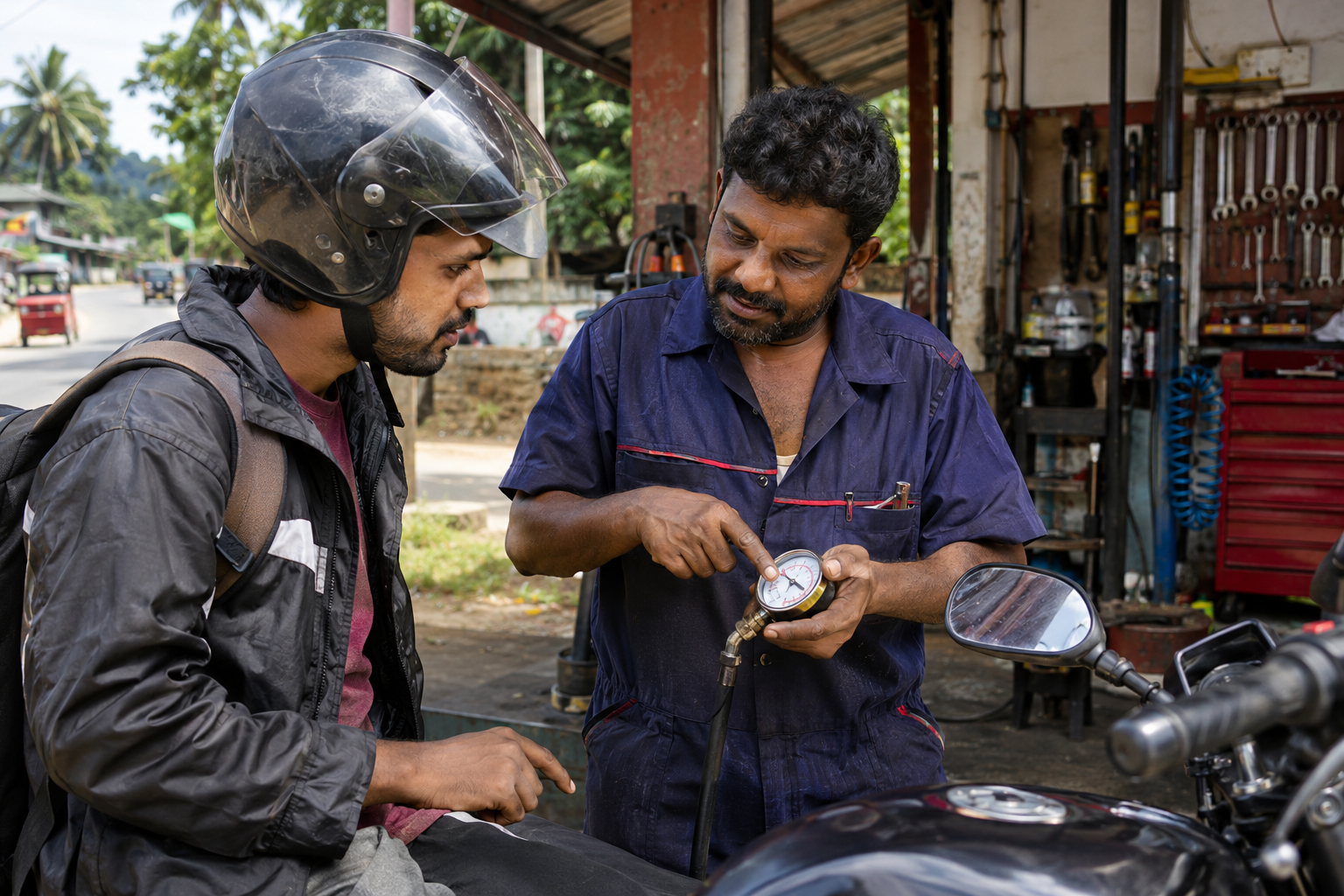
Drivers and riders in Sri Lanka ask a lot of
their tyres. Patchy tarmac, tight kerbs, heavy rain, long climbs to the hill
country, and weekend trips with the whole family and a boot full of luggage.
Most tyre trouble doesn't arrive with a bang. It builds quietly through low
pressure, worn tread and damage nobody noticed. This guide answers the
practical questions: what the right tyre pressure for Sri Lankan roads really
means, how often to check it, which tyre checks after hitting a pothole
actually matter, and how to run through tyre checks before a long trip without
turning it into a chore. None of it is complicated, and all of it is cheaper
than a roadside breakdown.
It's the pressure printed on your vehicle's
label, one figure for the front tyre and one for the rear, measured when the
tyres are cold. That applies to motorcycles, scooters and three-wheelers, and
the same logic holds for cars and vans. Rough roads don't change the number.
They just make it more important to keep to it.
Driving warms the tyre and the air inside it,
so a reading taken straight after a ride will look higher than the true figure.
The recommended pressure is a cold one. Measure before you drive, or after the
vehicle has been parked for a while.
1. Find the pressure label (or the manual) and
note the front and rear figures.
2. Measure each tyre cold with a reliable
gauge, and the spare too where one is fitted.
3. Add or release air until the reading
matches the label.
4. Measure again to make sure you got it
right.
At least once a week, and before every long
journey. If a tyre keeps losing air between checks, don't just top it up and
move on. That's a job for a tyre professional.
Replace a tyre when the tread reaches the wear
indicators. Have a tyre professional look at anything that isn't normal wear,
and keep an eye on the manufacturer's age guidance, because tyres age even if
they've barely been used.
| What
you notice | What
to do |
| Tread has reached the wear
indicators | Replace the tyre |
| A bulge on the tyre | Have a tyre professional inspect it |
| A deep cut | Have a tyre professional inspect it |
| Pressure that keeps dropping | Have a tyre professional inspect it |
| The tyre is older than the
manufacturer's guidance suggests | Replace it, even if the tread looks
fine |
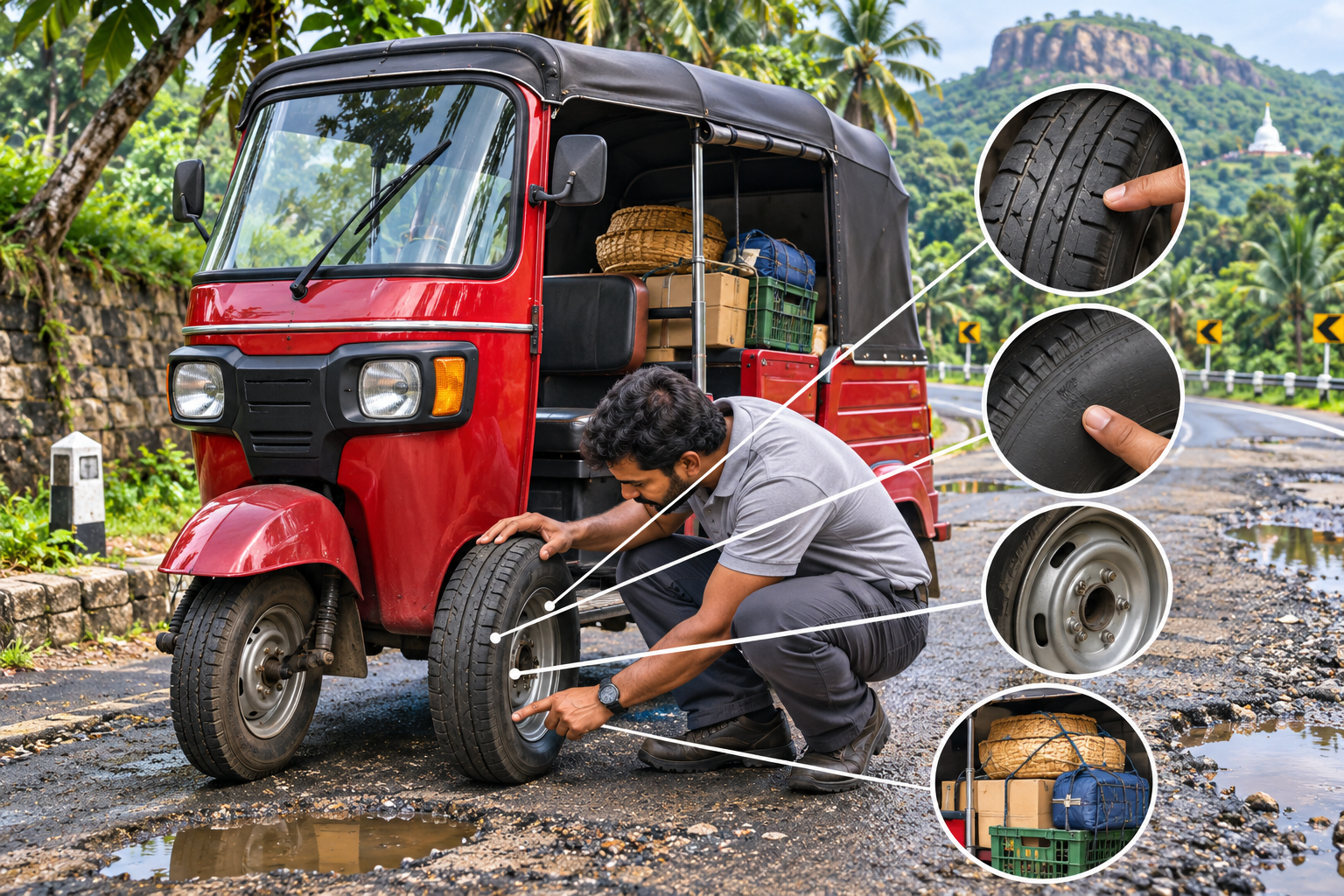
That applies to a three-wheeler tyre as much
as a motorcycle or car tyre. Three-wheelers often work long days with
passengers or goods on board, so it pays to look at the tyres more often.
The core tyre checks after hitting a pothole
are simple: stop somewhere safe as soon as you can, then inspect the tyre
sidewall and the rim. After a hard impact with a pothole or a kerb, damage can
sit where you can't feel it yet. If the vehicle pulls to one side, vibrates, or
later shows uneven tyre wear, get the tyres and wheels checked.
| Sign | What
it can point to | What
to do |
| Pulls to one side | A tyre or wheel problem; on cars,
SUVs and vans, possibly alignment | Have tyres and wheels checked |
| New vibration | A damaged tyre or wheel; on cars,
SUVs and vans, possibly balancing | Have tyres and wheels checked |
| Uneven tread wear | Pressure, wheel or alignment
problems | Have tyres and wheels checked |
| Cut or bulge on the sidewall | Impact damage | Have a tyre professional inspect it
before you carry on |
Yes. For cars, SUVs and vans, check alignment
and balancing as needed after a hard hit. Bikes and three-wheelers get the same
visual check of the tyre and rim, but alignment and balancing are mostly a
four-wheeler concern.
Hidden potholes are most common in the rain,
when puddles hide them. Our rainy-weather tyre guide covers how to drive
through standing water.
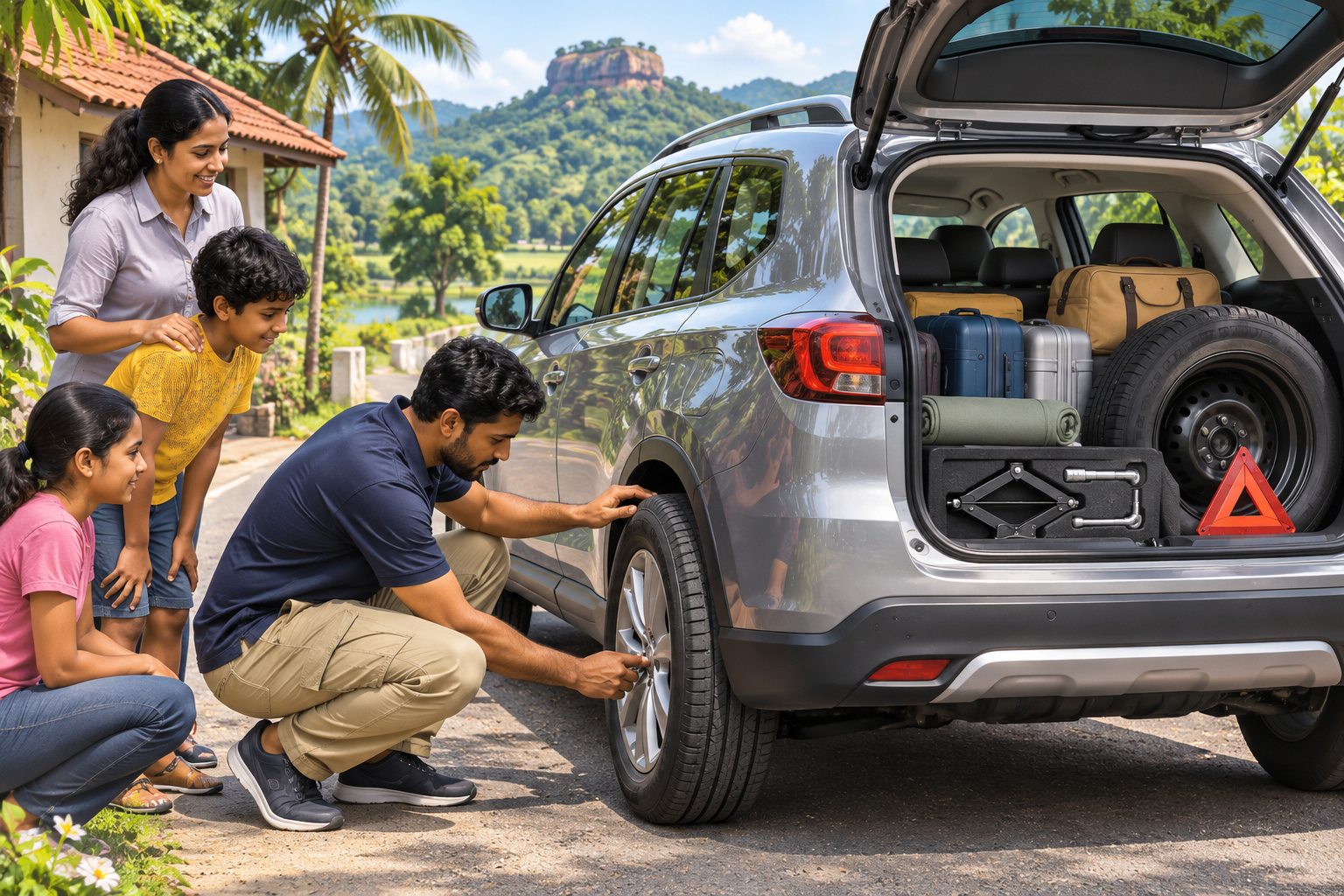
Run through the tyre checks before a long trip
the same way every time: pressure, tread and condition on every tyre, then what
you're carrying. Same routine each time is exactly why it works. Use this list:
1. Pressure: measure every tyre cold
against the label, spare included.
2. Tread: compare it with the wear
indicators.
3. Damage: look for cuts, bulges and
uneven wear.
4. Spare, jack and tools: make sure
they're all there and usable.
5. Load: stay within your vehicle's
permitted load limit.
6. Specification: confirm the tyres
match the size, construction, load index and speed rating the manufacturer
specifies.
It raises the stakes. A loaded vehicle puts
more work on every tyre, so the specification matters more: size, construction,
load index and speed rating, all as the manufacturer states. For vans, also
check whether your model needs a commercial tyre. And never go past the
permitted load limit.
| Vehicle | Extra
things to check |
| Motorcycle or scooter | Front and rear pressure labels;
spare if fitted; tyre and rim condition |
| Three-wheeler | Pressure label; spare if fitted;
the load you're carrying |
| Car, SUV or van | All four tyres plus spare; jack and
tools; alignment and balance if the vehicle pulls or vibrates; commercial
tyre requirement for vans |
If a long list feels like too much, this is
the short version. Most of it comes down to three moments: once a week, before
a long journey, and after anything that hits the tyre hard.
| When | What
to check |
| Once a week | Cold pressure on every tyre, spare
included where fitted |
| Before a long trip | Pressure, tread against the wear
indicators, cuts and bulges, spare, jack, tools, load and specification |
| After a hard pothole or kerb impact | Sidewall and rim, then pulling,
vibration or uneven wear |
| Whenever something looks wrong | Have a tyre professional inspect
any bulge, deep cut or recurring pressure loss |
Two examples from the range: the DSI GEN-X
MC69 80/100-17 Tubeless for motorcycles and the DSI Savibala SRI/TW-04 4.00-8
for three-wheelers. They're useful when you want to see how a motorcycle tyre
and a three-wheeler tyre differ in size and tread. Browse the Motorcycle
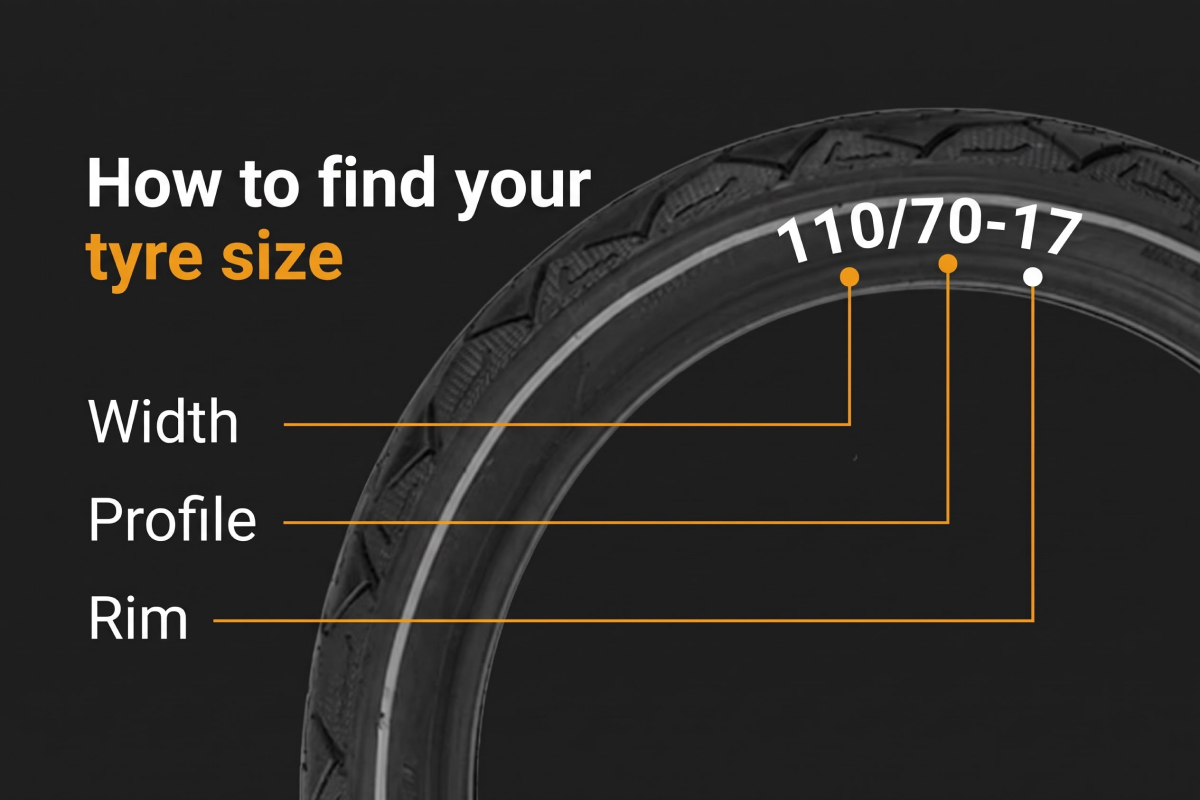
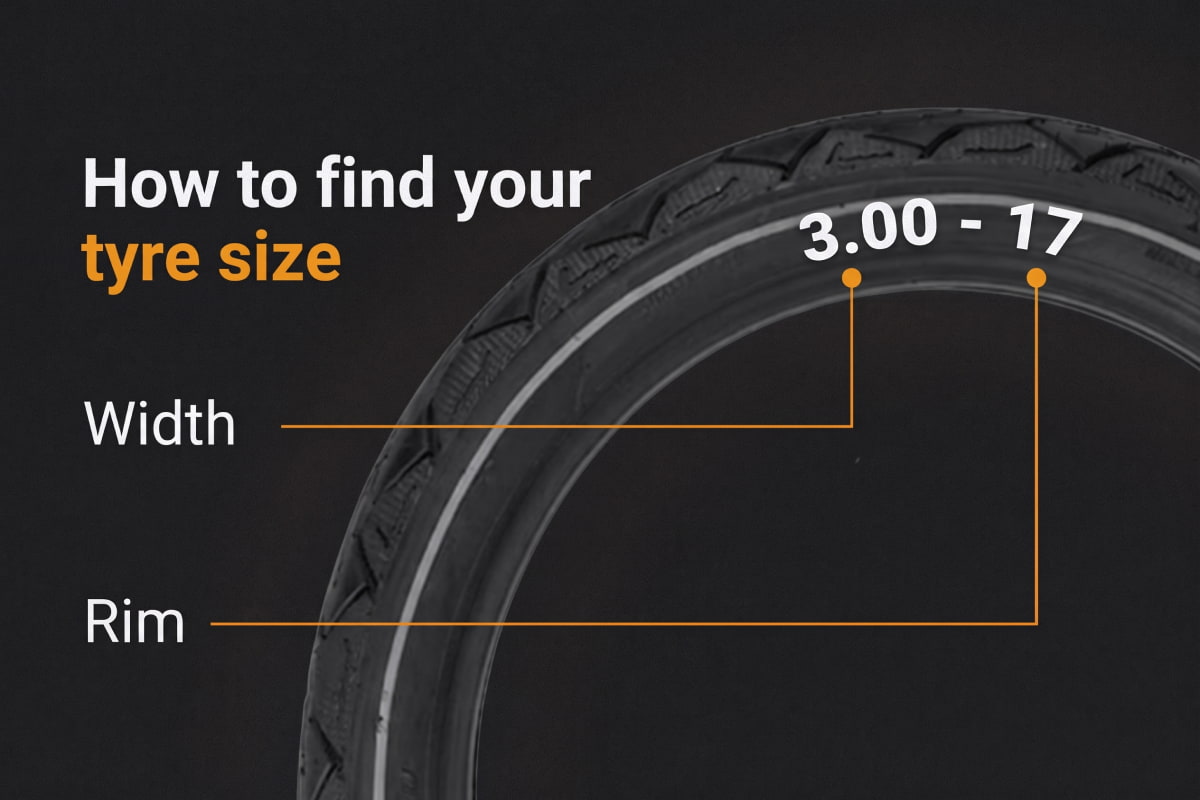
tyres category or the full Catalogue, and use the tyre size guide
if you need help reading your current size.
What tyre pressure should I
use on Sri Lankan roads?
Use the cold pressure on your vehicle's label
for each tyre, front and rear. Rough roads don't change the recommended figure.
They just make regular checks more important.
What should I check after
hitting a pothole?
Look at the tyre sidewall and the rim for
cuts, bulges or dents. If the vehicle pulls to one side, vibrates or wears its
tyres unevenly afterwards, have the tyres and wheels checked.
What tyre checks should I do
before a long trip?
Measure pressure on every tyre including the
spare, compare tread with the wear indicators, look for cuts and bulges,
confirm the spare, jack and tools are there, and stay within the vehicle's
permitted load limit.
When should I replace my
three-wheeler tyre, and what does a new one cost in Sri Lanka?
Replace it when the tread reaches the wear
indicators, or sooner if a professional finds a bulge, a deep cut or recurring
pressure loss. Prices depend on the size and product, so check the current
price on the Three-wheeler tyres page.
How often should I check my
tyre pressure?
At least once a week and before long journeys,
measured cold.
| Keep your tyres ready for every road! |